You're Not Lazy. Your Signal Is Broken. (Here's the 45-Minute Fix)
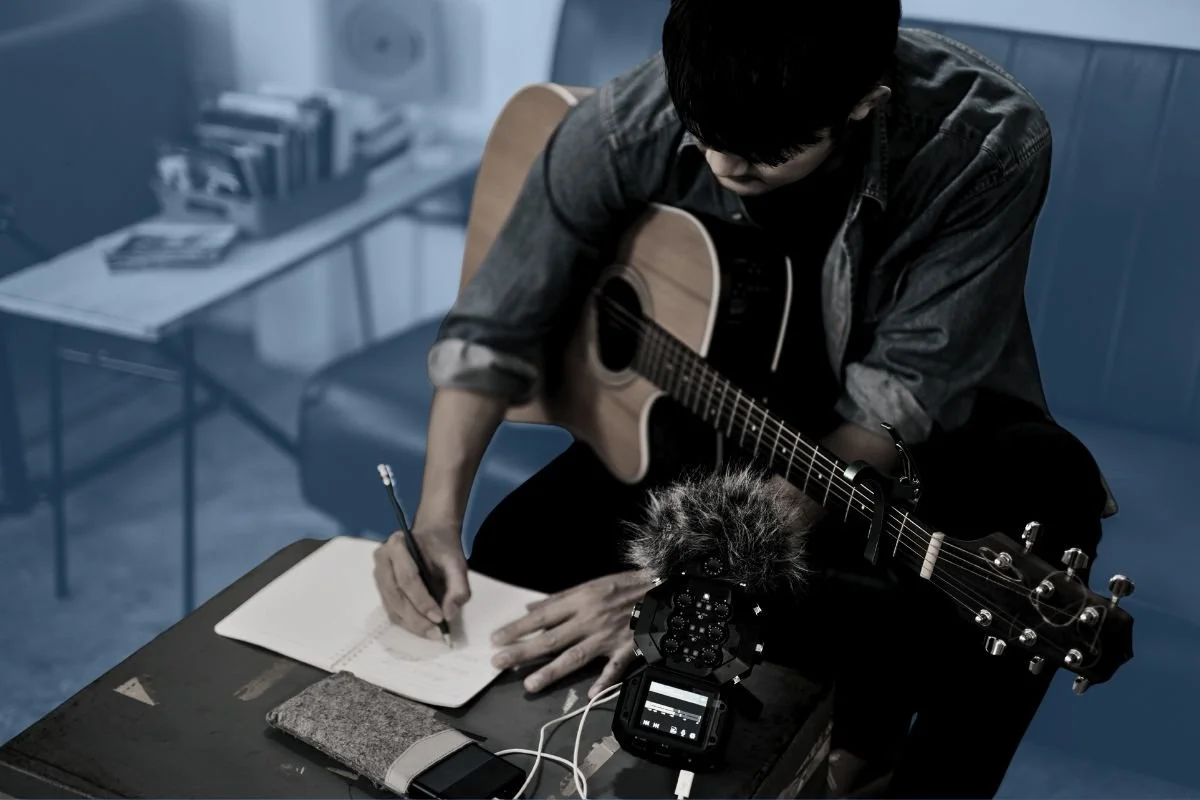
So I’m sure that you’ve read comments and social media posts saying some sort of a version of… “Most artists don't fail because they lack talent, they fail because of ________.”
Personally, I think artists fail by not learning to protect their time to do the work to create. The world is LOUD. They fail because their creative signal gets buried under noise.
You start the day with a plan. You open your phone for "one thing." Forty minutes later you've answered three texts, watched five clips, compared your life to somebody else's highlight reel, checked your numbers, questioned your direction, and lost the thread of what you were doing.
Then you tell yourself: I'm lazy. I'm undisciplined. I'm not cut out for this.
That's the trap.
What's actually happening is simpler and more solvable: Your creative state is fragile. Your environment is noisy. Your system isn't protected.
In physics, there's a concept called decoherence—a scientific description of how a delicate, coherent state gets disrupted by interaction with its environment. The signal breaks down because the surrounding noise is too strong.
I'm borrowing this word because it explains what artists live every day: Your most valuable creative state can't survive constant interference.
You don't fix it by becoming a different person. You fix it by building a system that protects your signal and trains your subconscious to carry you when motivation disappears.
The 5-Minute Closed-Room Reset (Try This Right Now)
Before we go further, here's something you can do in the next five minutes that will immediately prove the concept:
Set a timer for 5:00.
Put your phone physically out of reach—another room, a drawer, face down across the room.
Choose one micro-output you can complete in 5 minutes:
Write 3 hook lines for a chorus
Record a single 15-second vocal memo of a melody idea
Draft the first two sentences of your next caption
List 5 content ideas from one song lyric
No switching tasks. No checking anything. Just complete the one output until the timer ends.
When the timer ends, write one sentence: "I kept the room closed and produced ______."
That's it. One rep.
It works because it proves two things immediately: (1) your environment changes your focus, and (2) you can create without waiting on motivation.
Now let's talk about why this matters and how to scale it.
The Real Problem: You're Trying to Create in an Open System
When your day is an open system, everything has access to you.
Messages. Metrics. Opinions. Comparisons. Drama. News. Random thoughts.
That's not a character flaw. That's design.
The attention economy is built to keep you available, reactive, and scrolling. When you're reactive, you don't create. When you don't create, you don't move your career forward.
If you don't protect your creative signal, the world will spend it for you.
The Myth That Keeps You Stuck
In my years as a music publisher, artist manager, and helping artists secure record deals, I've watched one pattern repeat endlessly:
A burst of momentum. A great rehearsal. A strong write. A good show. A promising release.
Then the artist disappears.
Not because they stopped caring. Because the system they built depends on feelings.
Inspiration is not a plan. Motivation is not a strategy.
Your subconscious doesn't run on good intentions. It runs on patterns.
Here's what I've learned: The most successful songwriters schedule their creative appointments with collaborators. Two appointments a day. They don't wait to feel inspired. They show up because showing up is the job.
The goal isn't to "unlock hidden energy." The goal is to train automaticity—the part of your subconscious that says, "This is what we do," even when you don't feel like doing it.
Five Noise Sources That Break Your Signal
If you're inconsistent, it's usually because one of these noise sources is too loud:
1) Constant Input
You're consuming all day and trying to create at night. By the time you sit down to write or post, your brain is full of other people's ideas, problems, and emotional energy.
A songwriter I worked with couldn't finish anything until she stopped listening to music in the car. Once she created silent space before her sessions, her output tripled.
2) Metric Addiction
You check numbers too often—streams, likes, comments, followers. Every check becomes a vote on your worth.
I watched an artist spend 30 minutes each morning refreshing Spotify stats before writing a single line. When he cut that to twice weekly, his creativity returned. Metrics are feedback, not identity.
3) Perfection as Protection
Perfection is often fear in a nicer suit. If it's never finished, it can never be judged.
I've seen artists rewrite the same verse for six months while their peer releases six songs and builds a following. Done beats perfect.
4) Emotional Contagion
Your nervous system becomes a sponge for everyone else's stress. You absorb pressure, drama, and urgency that isn't yours.
One artist started each day reading industry Twitter threads about "how hard it is to make it." She was anxious before 9 AM. When she stopped, her energy shifted within days.
5) No Closed Room
You don't have a protected window where creation is the only job. You're trying to build a career in the margins—between texts, between notifications, between everyone else's needs.
The Fix: Build a Closed System and Train Your Autopilot
Your job is to do two things:
Protect your creative signal
Automate your behavior through subconscious training
Not more apps. Not a new personality. Just signal protection and automaticity.
Here's how.
Part 1: How to Protect Your Signal (3 Simple Rules)
Rule 1: Create in a Closed Room
A closed room isn't a physical space—it's a boundary. For a set amount of time, you remove inputs so your brain can generate output.
Minimum viable closed room: 45 minutes. If you can do 90 minutes, even better.
Closed room rules:
Phone out of reach
No email
No notifications
No scrolling
No "quick check"
One task only
Your brain will resist this at first because it's used to stimulation. That resistance isn't a sign you're doing it wrong. It's proof you're finally doing something different.
What to do in your closed room depends on your role:
Songwriters: Focus on one section of one song—verse, chorus, or bridge. Complete it.
Performers: Practice one specific song or one technical element. Record yourself.
Producers: Work on one track element—drums, bass, or mix. Finish that piece.
The point isn't volume. It's completion.
Rule 2: Stop Measuring During Creation
If you check numbers before you create, you hand your mood to the internet. Don't measure your worth before you do your work.
Pick two measurement windows per week. That's it. Metrics belong in a review session, not in your creative session.
Rule 3: Reduce the Number of Decisions
Decision fatigue is a silent career killer. If every day you decide when to post, what to say, what to practice, what to write, what to record, what to promote—you'll burn out or freeze.
The best artists I know decide once and execute many times. Create templates. Create routines. Create defaults. Make your career easier to run.
Part 2: How to Train Your Subconscious (3 Steps)
Your subconscious is the set of automatic responses you've trained through repetition. It's the part of you that reaches for the phone without thinking. The part that avoids an uncomfortable task. The part that delays posting until it's perfect.
Here's the good news: If your subconscious can be trained to sabotage, it can be trained to support.
But it won't change through insight alone. It changes through cues, friction, and reps.
If you want your subconscious to support you, you need three things:
Step 1: Choose One Cue
Pick something that happens every day and tie your routine to it.
Examples:
After coffee
After you drop the kids off
After you get home from work
After you shower
When you sit at your desk
Step 2: Make the Routine Small Enough to Win
Most artists fail because they set a routine that requires motivation. Your routine should be so small it can be done on a bad day.
Examples:
Write one verse concept
Record one 15-second vocal pass
Practice one song section for 10 minutes
Draft one post caption
Film one 10-second clip
Send one follow-up email
Small isn't weak. Small is repeatable. Repeatable trains your subconscious.
Step 3: Define the Reward
Your subconscious learns through reward. The reward doesn't need to be a treat—it can be completion.
Examples:
Check a box on your tracker
Text your accountability partner "done"
Put $1 in a "studio fund" jar
Log the rep in a notes app
The point is to make completion visible. What gets tracked gets repeated.
Finding Your Accountability Partner
You don't need to broadcast your goals to the world. Pick one person who believes in your talent and also pushes themselves toward their own goals.
This person should:
Respond when you text "done"
Check in if you go silent
Challenge you without judgment
Have their own creative practice
Don't pick someone who needs you to manage their motivation. Pick someone who's already moving.
What to Do When You Break Your Streak
You will miss a day. Something will interrupt you.
Don't beat yourself up. Choose your thoughts wisely: "I'm back today" beats "I already failed."
Just restart. Missing one day doesn't erase the four days you completed. The goal is progress, not perfection.
The real unlock isn't never falling off—it's getting back on faster each time.
The "Hidden Energy" You're Actually Looking For
When artists talk about "hidden energy," they mean: "I know I have more in me, but I can't access it."
You don't access it through hype. You access it through protection and reps.
When you protect your signal, your brain becomes calmer.
When you repeat a small routine, your subconscious stops negotiating.
When your subconscious stops negotiating, you become consistent.
When you become consistent, you gain confidence.
When you gain confidence, you take bigger swings.
That's the real unlock—not magic, momentum.
Your Next Move: Start With One Thing
If you want to know exactly where to start, answer these honestly:
Do I have a closed-room creation block on the calendar?
Is my phone out of reach during creation?
Do I measure metrics during my creative sessions?
Do I rely on motivation to start?
Is my daily routine small enough to win on a bad day?
Do I have a simple way to track completion?
If you said no to any of these, that's your next move. You don't need more information. You need a system.
Closing: Your Career Requires Protection
The world is loud. Your job is to protect the part of you that makes the work.
You do that by creating a closed system for your craft. And you do that by training your subconscious with small, repeatable routines that stack wins.
If you build this right, you won't need to "feel ready" to show up. You'll show up because that's who you are.
And over time, the world will notice the signal you refused to let the noise destroy.
Ready to Build Your System?
I offer free 30-minute consultations where we'll map out a strategy for your music success and answer any questions you have about your next steps. From that initial call, we can identify how I might help solve your specific challenges and develop a step-by-step plan based on your situation.
Whether you're releasing your very first song or you're a more seasoned artist who needs help with release strategy and navigating how the new music industry works today, I can help you build the system that fits your life and goals.
Book your free consultation: https://nashvillemusicconsultants.com/consultation-form
Your Music Row Mentor,
Clay Myers