Why Do So Many of Today's New Country Artists Feel Like They're a Clone?
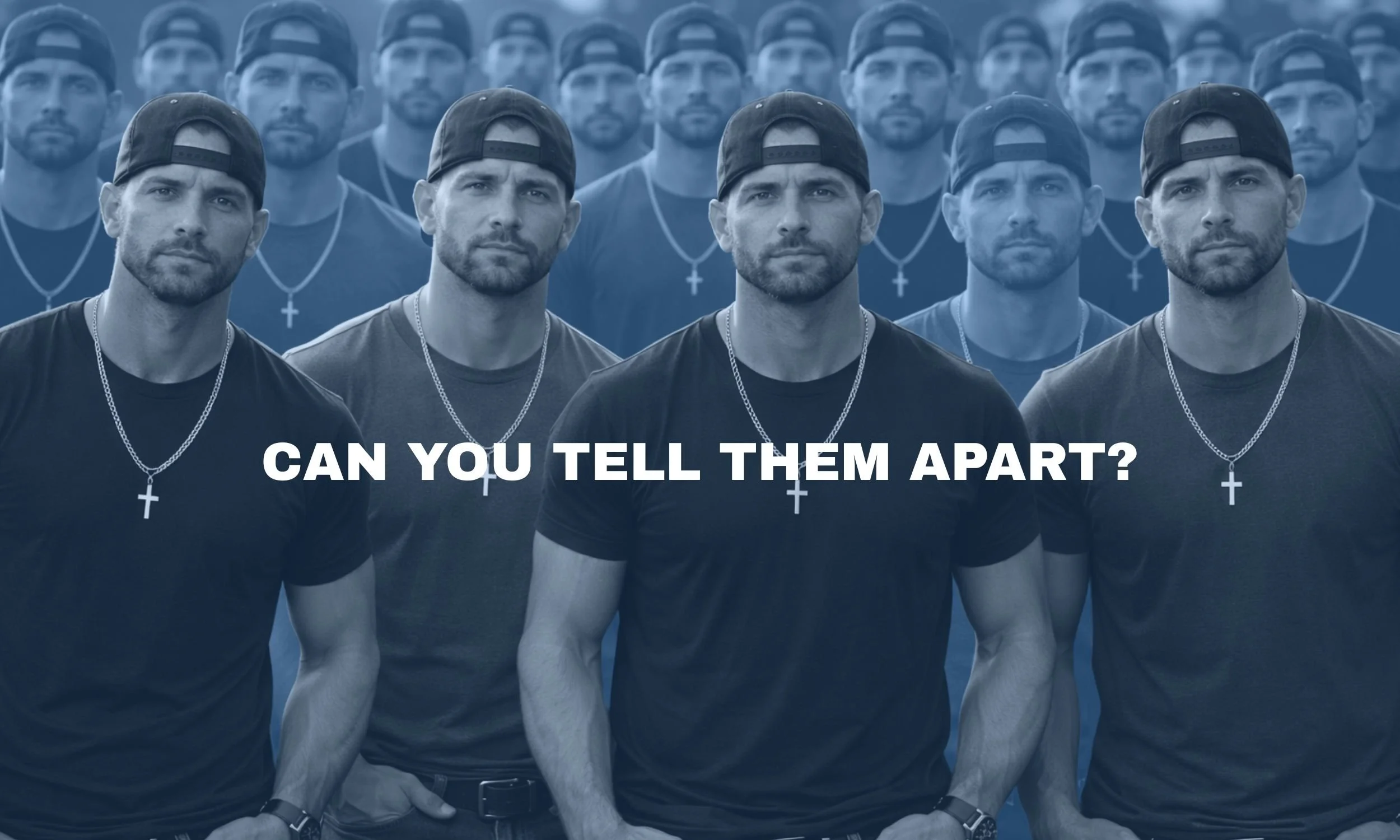
When an artist can't define their own sound, they borrow someone else's template. That's how cloning happens and why country music today feels like scrolling through ten versions of the same artist.
Same vocal inflection. Same drum pocket. Same guitar tones. Same wardrobe. Same "I've seen this before" vibe.
From years of watching artists develop (and watching the business reward certain patterns), I don't think this is mainly a talent problem. I think it's a clarity problem, mixed with a system that quietly teaches artists to play it safe.
The real reason cloning wins early
Country is a trust genre. Fans want to recognize what world they're entering quickly. The industry also wants to recognize what it can sell quickly.
So the market rewards what is immediately understandable. And if you're not careful, "understandable" becomes "interchangeable."
That's not a moral failure. It's an incentive problem.
The forces that quietly push artists toward sameness
1) Recommendation systems reward music that fits an existing box
Platforms are built to match listeners with music they're likely to enjoy, fast. Research published by Spotify has found that algorithmically driven listening through recommendations is associated with reduced consumption diversity. (Spotify Research)
What that means in real life is simple: when your sound is easy to categorize, systems can place you faster. When your sound is hard to categorize, you may be more original, but you often have to work harder to create the first wave of demand.
2) Popular music as a whole shows measurable signs of homogenization
This isn't only a country conversation. Large-scale analysis published in Scientific Reports has identified trends consistent with increased conventionalism and homogenization signals in aspects of popular music over time, including timbre. (Nature)
This doesn't mean innovation is dead. It means the default gravity of the market pulls toward what's already working.
3) Country has extra "format gravity" because the business model rewards predictability
Country has long been shaped by professional ecosystems that are very good at producing repeatable outcomes. Scholarship examining commercial country songwriting has discussed how structural factors, including deal structures like 360 deals, can influence creative decisions and contribute to perceived homogeneity. (Cambridge University Press & Assessment)
The Recording Academy's recent decision to split the country album category into Best Traditional Country Album and Best Contemporary Country Album for the 2026 awards shows how alive the "what is country?" debate remains. (Recording Academy) The coverage around that change, including how it followed Beyoncé's Cowboy Carter moment, demonstrates the ongoing tension around genre boundaries. (AP News)
Again, this doesn't mean artists don't want to be original. It means the incentives often reward "close enough to what already wins." And when a genre is publicly debating what "counts," newer artists tend to self-edit.
Here's what most artists miss:
Country doesn't require you to be familiar. It requires you to be understandable.
The market doesn't punish difference nearly as much as it punishes confusion.
Most artists who "try to be different" fail for one primary reason: they never got clear enough for the audience to follow them into the new thing.
If you want to be different, you have to prove it first
If you truly want to be different, you usually don't get permission first.
You build proof.
You build traction. You build repeatable fan response. You build a world people can enter and describe. Then the bigger money pays attention, because risk goes down when demand is visible.
In today's landscape, the artist who wins leverage is the artist who can show evidence that their identity works, not just claim that it's unique.
The One-Sentence Test
Why this is harder than it sounds
I recently challenged one of my artists with a simple task: define their music and brand in one sentence.
I expected it to take five minutes.
It took longer than either of us thought it would, not because they lacked talent, but because this question exposes what most developing artists haven't been forced to confront yet. They've been creating without a clear thesis. They've been writing songs, posting content, choosing outfits, and chasing sounds, but they haven't decided what they stand for.
That's why this exercise is so powerful.
One sentence forces decisions. It removes the ability to hide behind vague words like "authentic" or "real." It forces you to get clear on the three things that must match if you want people to remember you:
Message: What do you consistently stand for? What emotional truth do you deliver?
Music: What lane do you live in sonically, specific enough that it's repeatable?
Image: What visual world are you inviting the fan into before you even sing a word?
This isn't a writing exercise. It's an identity exercise.
The question
If I only gave you one sentence to describe your music to the right fan, what would you say? Include who it's for, how it makes them feel, and what makes it unmistakably you.
What a strong answer must contain
A usable one-sentence definition has four parts:
Audience Who it's for in plain English, not "everyone."
Emotional promise What your music does for that listener.
Sonic anchors Your lane, described in concrete terms (sub-genre, instrumentation, energy, era references).
Point of view The throughline you stand for, the reason your songs exist.
If the sentence is mostly adjectives, you don't have positioning. You have a mood board.
A simple framework to write it
"I make [lane] for [specific listener] who want to feel [emotion or transformation]. It sounds like [2 to 3 sonic anchors] and it's about [message theme]."
Write three versions. Choose the clearest. Then build everything from it.
How clarity turns into momentum
Here's the best part.
Once you fight through the early trial and error phase of developing your sound, your look, and your message, and you finally land on clarity, your progress accelerates.
Because clarity becomes a multiplier:
You stop chasing trends and start building identity.
Your songwriting gets sharper because you know what you're trying to say.
Your content gets easier because you know what world you're building.
Your visuals become consistent because you have rules.
Fans start describing you the way you intended to be known.
Opportunities move faster because decision-makers can instantly understand what you are.
And the moment you can define your music and brand in one clean sentence, your career stops feeling scattered and starts compounding.
Different is not the goal.
Unmistakable is.